Solid Oxygen: What It Is, How It Forms, and Why It Matters
Discover what solid oxygen is, how it forms, its striking blue color, and its remarkable uses in science and industry. Your complete guide to oxygen's solid state.
Author
Super Admin
Published
5/5/2026
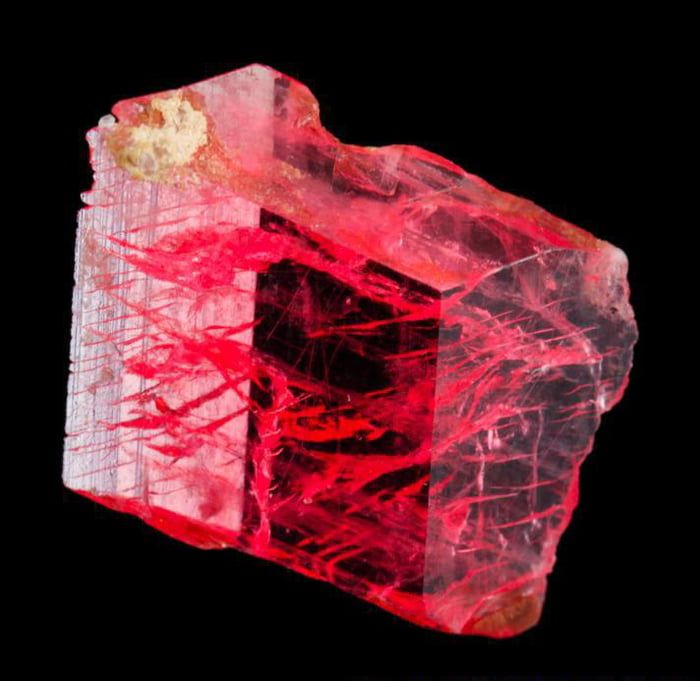
When we think of oxygen, we picture the invisible gas we breathe every moment of every day. But oxygen has a lesser-known side — a solid, crystalline form that looks nothing like the air around us. Solid oxygen is a fascinating substance that scientists, engineers, and researchers work with in extreme conditions, and understanding it opens a window into how matter behaves at the edges of temperature and pressure.
In this article, you will learn exactly what solid oxygen is, how it forms, what makes it look the way it does, and where it is actually used in the real world.
What Is Solid Oxygen?
Solid oxygen is the solid phase of the chemical element oxygen (O₂). Like water turning into ice when it freezes, oxygen gas can be cooled to a low enough temperature that its molecules slow down and lock into a structured, crystalline arrangement — forming a solid.
At standard atmospheric pressure, oxygen becomes a liquid at −183°C (−297°F) and transitions into a solid at −218.8°C (−361.8°F). These temperatures are well beyond anything we encounter in everyday life, which is why solid oxygen exists only in laboratory and industrial environments — or in the extreme cold of space.
The Basic Properties of Solid Oxygen
• Chemical formula: O₂
• Melting point: −54.36°C (−65.85°F) at standard pressure
• Density: approximately 1.495 g/cm³
• Color: pale blue to deep blue, depending on the phase
• Magnetic behavior: paramagnetic (attracted to magnetic fields)
Why Does Solid Oxygen Look Blue?
One of the most striking things about solid oxygen is its color. Unlike most solids we encounter, it is not white, clear, or gray — it is distinctly blue. This is also true of liquid oxygen, which shares the same pale blue hue.
The blue color comes from how oxygen molecules absorb light. Oxygen absorbs red wavelengths of visible light more than other wavelengths, which means the reflected light appears blue to our eyes. This phenomenon, known as electronic absorption, is intrinsic to the oxygen molecule itself — not a result of impurities or coatings.
This property makes solid oxygen visually distinctive and easy to identify in laboratory settings. It also serves as a reminder that the familiar invisible gas we breathe is, at its core, a blue substance when cooled to its solid form.
The Different Phases of Solid Oxygen
Solid oxygen does not exist in just one form. Scientists have identified multiple crystalline phases of solid oxygen, each stable under different combinations of temperature and pressure. These phases are labeled with Greek letters.
Alpha (α) Phase
This is the most stable form at low temperatures and standard pressure. It has a monoclinic crystal structure and appears deep blue in color.
Beta (β) Phase
The beta phase exists at slightly higher temperatures within the solid range. It has a rhombohedral crystal structure and is also blue but with a slightly lighter tone.
Gamma (γ) Phase
The gamma phase appears at even higher temperatures, just below the melting point. It is pale blue and has a cubic crystal structure.
High-Pressure Phases
Under extremely high pressure — far beyond standard atmospheric conditions — oxygen can form additional exotic solid phases. One of the most intriguing is a red or “epsilon” phase that forms above 10 gigapascals of pressure. At even higher pressures, solid oxygen can become metallic and even potentially superconductive. These high-pressure phases are subjects of active scientific research.
How Is Solid Oxygen Produced?
Creating solid oxygen requires removing heat from oxygen gas or liquid oxygen until temperatures drop below its freezing point. In laboratory settings, this is typically achieved using cryogenic equipment — systems designed to operate at extremely low temperatures.
Liquid nitrogen (−196°C) is not cold enough to solidify oxygen on its own, since oxygen freezes at −218.8°C. Solidification usually requires more powerful cooling agents or vacuum-based cooling methods that allow liquid oxygen to evaporate and cool itself to the freezing point.
In space, solid oxygen can form naturally in extremely cold environments, such as on some moons or comets where temperatures plunge far below the freezing point of oxygen.
Uses and Applications of Solid Oxygen
Solid oxygen is not just a laboratory curiosity. It has practical applications and plays a role in several fields.
Rocket Propellant Research
Solid oxygen has been studied as a potential component in high-energy rocket propellants. When combined with a fuel, it can release enormous amounts of energy due to oxygen’s highly reactive nature. Researchers explore solid oxidizer forms of oxygen to improve the energy density of propellant systems.
Scientific Research and Physics
Solid oxygen is an important material in condensed matter physics. Its magnetic properties, phase transitions, and behavior under pressure make it a useful test subject for studying fundamental physical principles. Understanding how oxygen molecules interact in a solid state helps scientists build better models of molecular behavior.
Cryogenic Technology
The cryogenic production and storage of oxygen in its liquid and solid forms is central to industries ranging from medical oxygen supply to steelmaking. While solid oxygen itself is rarely the end product, understanding its properties informs the safe handling of oxygen at ultra-low temperatures.
Safety Considerations When Handling Solid Oxygen
Solid oxygen is an extremely powerful oxidizer. This means it dramatically accelerates combustion and can cause materials that are not normally flammable to ignite or burn violently. Organic materials, petroleum-based substances, and many metals can react dangerously in the presence of solid or liquid oxygen.
Only trained professionals using specialized cryogenic equipment should work with solid oxygen. Safety protocols include using oxygen-compatible materials, avoiding contamination from fuels or combustibles, and working in well-ventilated environments with appropriate protective gear.
Frequently Asked Questions About Solid Oxygen
Is solid oxygen the same as dry ice?
No. Dry ice is solid carbon dioxide (CO₂), a completely different substance. Solid oxygen is frozen O₂ — the same oxygen in the air we breathe — cooled to −218.8°C or below.
Can solid oxygen exist at room temperature?
No. Solid oxygen can only exist at extremely low temperatures, far below anything found in nature on Earth at the surface. At room temperature, oxygen is always a gas under normal pressure conditions.
What color is solid oxygen?
Solid oxygen is blue. This is the same blue color seen in liquid oxygen, caused by oxygen molecules absorbing red light wavelengths. The shade varies slightly depending on which crystalline phase is present.
Is solid oxygen magnetic?
Yes. Oxygen is paramagnetic in all its phases, including the solid state. This means it is weakly attracted to magnetic fields. This property has made solid oxygen a valuable material in physics experiments studying magnetism at the molecular level.
Where does solid oxygen occur naturally?
Solid oxygen does not form naturally on Earth’s surface. However, it can exist in extremely cold environments in space, including on comets, in interstellar ice, and potentially on some moons of the outer solar system where temperatures are cold enough to freeze oxygen.
Conclusion
Solid oxygen is one of those remarkable substances that challenges our everyday understanding of familiar materials. The oxygen we depend on to breathe can, under the right conditions, transform into a blue crystalline solid with unique properties, multiple phases, and applications in rocket science, physics research, and cryogenic engineering.
Whether you are a student exploring chemistry and physics, a professional working in cryogenics, or simply a curious mind wanting to understand the world more deeply, learning about solid oxygen reveals how much complexity exists even in the most common elements around us.
If you found this guide useful, consider sharing it with a colleague or student who might benefit from understanding the science behind oxygen in its solid state. For deeper reading, consult peer-reviewed resources in condensed matter physics or cryogenic engineering for the latest research on oxygen’s high-pressure phases and applications.