How to Raise Startup Funding: Everything You Need to Know
Now how to Raise Startup Funding: Everything You Need to Know
Author
Super Admin
Published
4/7/2026
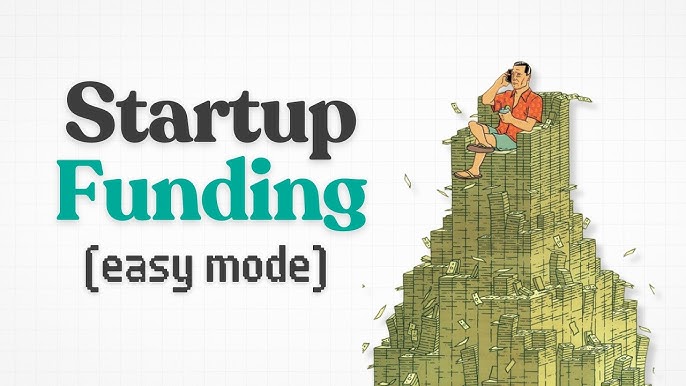
A startup fundraising strategy is crucial for the success and growth of any new venture. Securing capital is often the lifeblood of a startup, enabling founders to develop products, acquire customers, and scale operations. Without a solid strategy, entrepreneurs may struggle to attract the right investors, miss funding opportunities, or risk running out of cash during crucial growth stages.
A well-planned strategy helps founders identify the appropriate funding stages (pre-seed, seed, Series A, etc.), target the right investors, and pitch effectively. It also ensures that the business raises enough capital to hit key milestones without giving up too much equity or control. Ultimately, a thoughtful fundraising strategy sets a foundation for long-term success and investor trust.
1. Understanding the Two Types of Startups
Before diving into the specifics of raising money, it's important to understand the kind of business you’re building. Broadly, startups fall into two categories:
Explosive Growth Startups
These are the companies that are aiming for rapid growth with the goal of either getting acquired by a larger company or going public through an IPO. They usually require significant investment upfront and are fueled by venture capital. Companies like Facebook, Amazon, and Uber fit into this category. Investors in these businesses are looking for massive returns, often betting on the potential of the business to grow exponentially.
Lifestyle Businesses
On the other side of the spectrum, you have lifestyle businesses. These companies aren't focused on growing to a billion-dollar valuation; instead, they are designed to provide the founders with a comfortable living while maintaining control of the business. For these types of businesses, you can still generate revenue and profit, but they don’t require the same level of investment as explosive growth startups.
If you’re aiming for the explosive growth route, fundraising is an essential part of the journey, and the approach will be vastly different from raising funds for a lifestyle business.
2. The Basics of Startup Funding
The process of raising capital for a startup is commonly broken into various stages or "rounds," each with its unique requirements and expectations. Here’s a breakdown of those rounds:
Pre-Seed Funding (Pre-Seed Round)
This is the very first phase of funding when you’re still in the concept phase of your business. At this stage, you may be funding the business with your own money or small investments from friends, family, or early angel investors. The primary focus here is on getting your idea off the ground and developing your product or service.
Series A
By the time you reach Series A funding, your business should have demonstrated some solid growth. You’ll typically need to show at least $1 million in annual revenue. At this stage, you're looking for investors who can help you scale your business more efficiently, and the capital raised here is usually used for expansion, hiring, and growing your customer base.
Series B and Beyond
As your business continues to grow and scale, Series B rounds and beyond are for more mature companies. At this stage, you’ll need to prove that your business is on a growth trajectory and that you have a sustainable business model. Investors will focus heavily on metrics like revenue, market share, and operational efficiency. These rounds usually involve larger amounts of money and are typically led by venture capital firms.
3. The Importance of a Strong Funding Strategy
When raising money for your startup, it's crucial to have a well-thought-out fundraising strategy. Here are key considerations for making your fundraising process as effective as possible:
Understand Your Target Investors
Different investors focus on different stages of a company’s life cycle. If you're a pre-seed company, it would be a waste of time to approach investors who specialize in Series A rounds. Tailor your pitch and approach to investors who are aligned with your stage and goals. This ensures that your efforts are not wasted and helps you find the right fit for your business.
Focus on Key Metrics
Each stage of funding requires you to present a different set of metrics. For example:
Pre-seed and seed stage: Focus on the team, the product, and your initial traction.
Series A and B stages: Investors will want to see strong financials, growth metrics, customer acquisition cost (CAC), lifetime value (LTV), churn rates, and more.
Understanding which metrics matter most at each stage and preparing accordingly is critical to raising funds successfully.
4. Valuations: What’s Your Business Worth?
One of the most complex aspects of raising funds is understanding your business valuation. Valuation is how much your business is worth, and it plays a key role in how much equity you’ll give up in exchange for investment.
How to Value Your Startup
Valuation is not an exact science, especially for early-stage companies. At the seed stage, it’s largely based on the potential of your team, product, and market. As your company grows and generates revenue, valuations become more tied to multiples of revenue or profit.
For instance, in the case of Facebook, Peter Thiel’s $500,000 investment for 10% of the company valued Facebook at $5 million. This is the post-money valuation, which means the company was valued at $4.5 million before the investment. The process is more about negotiation between the company and investors, with the valuation reflecting the perceived risk and potential return.
At seed and series A stages, valuations typically range from $3 million to $5 million for pre-revenue businesses, depending on market conditions, the team’s expertise, and the product's potential. For companies with revenue, valuations can be based on multiples of annual revenue, often between 5x and 10x.
The Role of Convertible Notes
To avoid the complexity of agreeing on a valuation early on, many startups use convertible notes. These are a form of debt that converts into equity once the company raises its next round of funding, usually at a discounted price. Convertible notes delay the need for a hard valuation and can make early-stage fundraising smoother and less contentious.
5. Avoiding Common Pitfalls in Fundraising
Raising startup funding isn’t without its challenges. Here are some common mistakes that entrepreneurs often make during the process:
1. Raising Too Little Money
It’s tempting to raise the minimum amount of capital you think you’ll need, but this can often backfire. Fundraising is time-consuming and expensive. If you don’t raise enough capital to get you through to the next milestone, you may find yourself stuck in a cash crunch or needing to raise money sooner than anticipated.
2. Focusing Too Much on Valuation
While valuation is important, it shouldn’t be your primary focus. Getting the right investors who are aligned with your vision is far more valuable than maximizing your valuation. Remember, valuation is just one piece of the puzzle.
Conclusion: A Startup’s Fundraising Journey
Raising capital for a startup can be a long and complex process, but with the right strategy, it’s possible to successfully navigate the funding rounds and achieve your growth goals. Whether you're in the early stages or preparing for a Series B round, understanding the nuances of startup funding and preparing for the challenges ahead will set you up for success.
By focusing on the right metrics, understanding your valuation, and knowing when and how much to raise, you can secure the capital you need while avoiding common pitfalls. Whether you're a first-time founder or an experienced entrepreneur, mastering startup funding is essential to building a business that thrives. Raising money is just one part of the equation—the ability to execute on your vision and grow your business is what ultimately leads to success.