What Happens If the Strait of Hormuz Is Closed? Impact on Pakistan and the World
The Strait of Hormuz is a vital global oil route connecting the Persian Gulf to the Arabian Sea, making it one of the world’s most strategic waterways.
Author
Super Admin
Published
3/7/2026
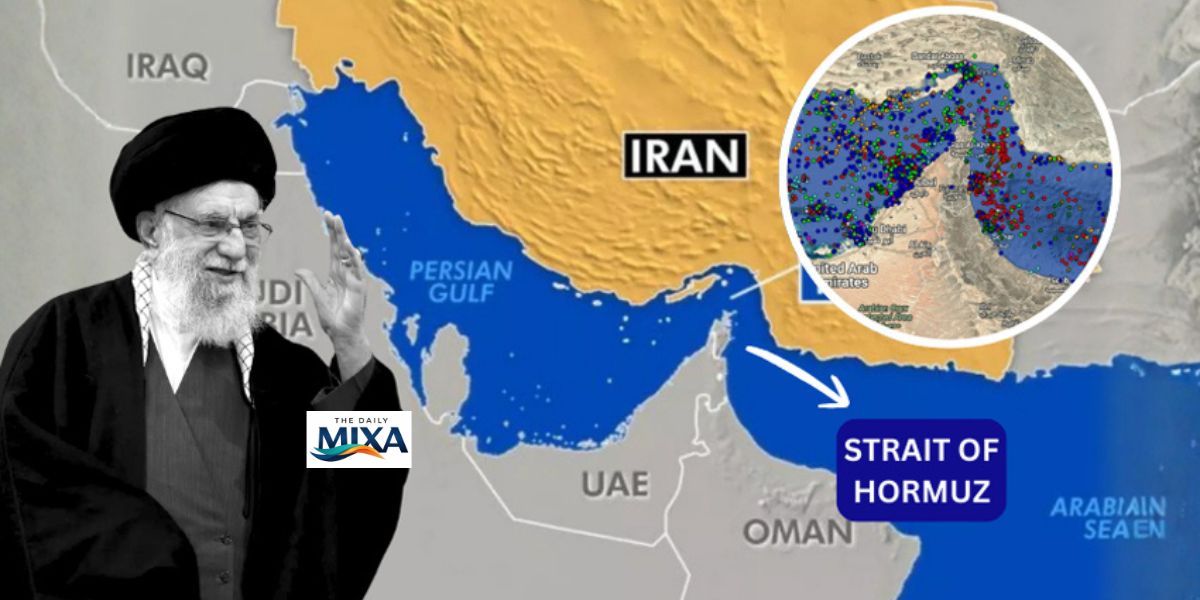
The Strait of Hormuz is one of the most important sea routes in the world for oil transportation. It is a narrow water passage located between the Persian Gulf and the Gulf of Oman. Every day, a large portion of the world’s oil supply passes through this small but extremely strategic route. Because of its importance, any conflict or blockage in this area can affect many countries around the world, including Pakistan.
Recently, many discussions and videos have explained what could happen if the Strait of Hormuz is blocked or closed. Such a situation could create serious economic and energy problems for many countries that depend on oil coming through this route.
Importance of the Strait of Hormuz
The Strait of Hormuz connects major oil-producing countries in the Middle East with the global market. Countries such as Saudi Arabia, Iran, Iraq, Kuwait, and the United Arab Emirates export large amounts of oil through this sea route.
Around 20% of the world’s oil supply travels through the Strait of Hormuz every day. This makes it one of the most critical energy transportation routes in the world. If ships are unable to pass through this strait, global oil supply would immediately decrease and oil prices would rise sharply.
Because the strait is narrow and strategically located, any military conflict or political tension in the region could disrupt shipping.
What Happens If the Strait of Hormuz Is Closed?
If the Strait of Hormuz is closed due to war or political conflict, the impact would be felt globally. Oil tankers would not be able to transport oil from Gulf countries to the rest of the world. This would lead to a sudden shortage of oil in international markets.
Oil prices could increase dramatically, and many countries would face fuel shortages. Industries that rely heavily on oil, such as transportation, manufacturing, and electricity production, would be directly affected.
Countries that import large amounts of oil would feel the biggest impact.
Impact on Pakistan
Pakistan relies heavily on imported oil to run its transportation system, industries, and power plants. According to the information shown in the video, Pakistan has approximately 30 days of oil reserves.
This means that if oil imports stop due to a blockade of the Strait of Hormuz, Pakistan could continue operating for about one month using its existing reserves. After that, the country could face serious fuel shortages unless alternative supply routes are found.
Fuel shortages could affect transportation, electricity generation, and the overall economy.
Global Impact
The impact would not be limited to Pakistan. Many countries around the world depend on oil transported through this route.
For example, the video suggests that China could sustain its oil needs for around 90 days using its reserves. However, even large economies would eventually feel the pressure if the blockage continued for a long time.
A prolonged disruption could lead to:
Rising global oil prices
Increased transportation costs
Economic slowdown in many countries
Energy shortages in oil-importing nations
Role of Gulf Countries
Many Gulf countries, including Qatar and the United Arab Emirates, depend on the Strait of Hormuz for exporting oil and gas Qatar.
For example, is one of the world’s largest exporters of liquefied natural gas (LNG). If the strait is closed, these countries would face major difficulties exporting their energy resources to global markets.
This would further increase the global energy crisis.
Conclusion
The Strait of Hormuz is a vital energy corridor for the entire world. Any disruption or closure of this narrow passage could cause a major global energy crisis. Countries that rely heavily on oil imports, such as Pakistan, would face serious challenges because their reserves are limited.
This is why the security and stability of the Strait of Hormuz are extremely important for global economic stability and energy supply. Governments around the world closely monitor this region because even a small disruption could have widespread consequences.